2026. The year of the Marmot.
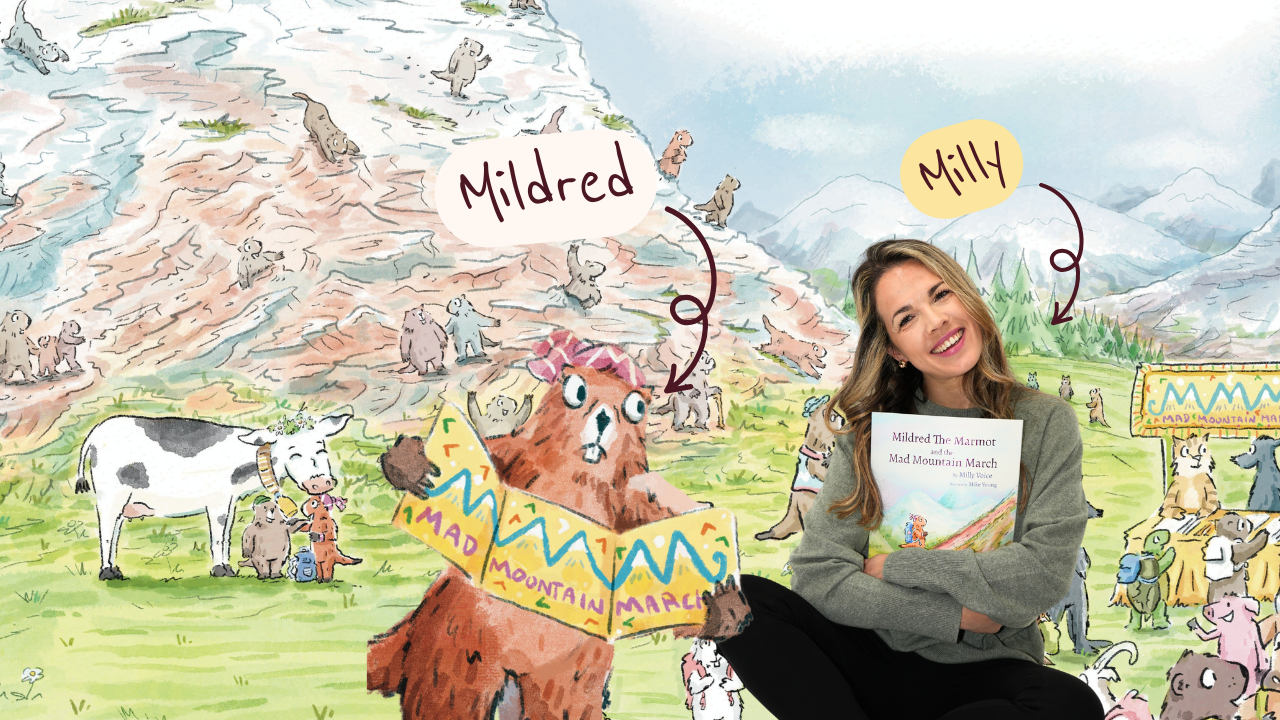
Mildred the Marmot and the Mad Mountain March by Milly Voice, illustrated by Mike Young. Published by Dottie Publishing.
If you had told me, circa ten years ago, that I would be able to Google the words ‘Mildred’ along with ‘Marmot’ and the lists of results would feature my name (as well as beautiful, colourful images thanks to the amazing illustrator Mike Young) which could be purchased in many currencies throughout the world, I would not have believed you.
That is because, my self-esteem regarding publishing, was not very high. Despite writing a book focused on confidence and self-belief, my own was being tested. I had had, many, many rejections. I was under prepared, not knowing who to ask, what to include in a ‘pitch’, nor any vision of whether my niche little tale that follows a lesser known animal (taking on a fairly niche sporting event) would ever have an ISBN number to it’s name, let alone featuring on an Amazon Top 10 list.
10 years later, there has been both a number on the back of an actual concrete copy as well as a number in a chart list. So here is what I have learnt. If you are trying to get a book published, or are interested in the process - read on.
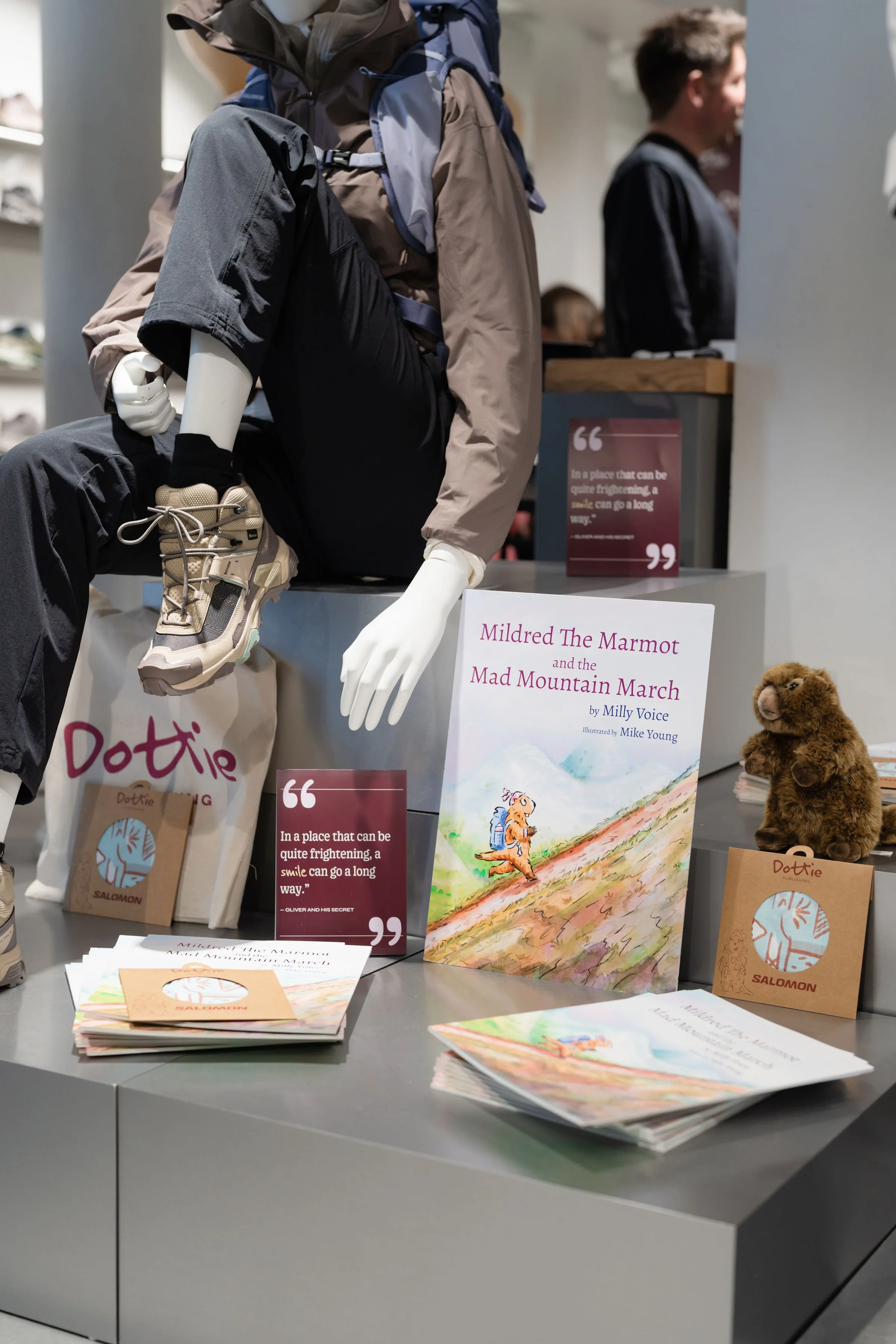
Mildred the Marmot book launch event in Covent Garden. Photo © David Christopher
1.You need to be pushy. To do that, you need to believe in it.
I am not the first to state it. Indeed, recently I saw the journalist Bryony Gordon comment on the fact she has been criticised for doing such a thing with her own book (which she ignored, and then did quite the opposite: pushed it more!). If you think you have a good idea with something , then you need to be bold.
For me, this grew over time. Confidence in my profession as a teacher, confidence in the philosophy of what I think is important for young people to hear (I effectively taught ‘Confidence studies' for a long time and still run a ‘Confidence Club’.) Confidence is also the central message of my debut book. If you put your mind to something, and have self-belief, you can run long distances. You can take on new difficult tasks. You can learn to make new friends or try new skills. You can write a book and get it published.
So buck up and be ready to have some conviction in what you are doing. Then, when the rejections come (which they do, in abundance) you are ready for it. Because all it takes, at the end of the day, is one person to believe it.
2. Edit with humility
Sometimes we are our own toughest critic. Sometimes, we need help with that. So, it is no major revelation (I see many writers comment on how rewarding this process is) that ideas need to evolve and feedback strengthens your work.
Some years after writing Mildred, I was on another mountain trip to Chamonix. I felt a burst of motivation (the mountain air does that..) to re-visit my work. In between runs, I spent time re-shifting, re-formatting, working on the pitch etc. The process was a blur, but the refinement was a requirement. Since signing my debut book with Dottie Publishing, I have worked with a brilliant editor Alice Harding whose job has been to help me reflect on what I was trying to convey. Is the rhyme sharp enough? What do I want the reader to understand from that line? etc.
In short, re-visit, take the feedback, maintain a growth mindset. If the idea is good, the idea will get there.

Chatting with illustrator Mike Young at the launch event in Salomon, Covent Garden. Photo: © David Christopher
3. You do not have to also be the illustrator.
Dottie Publishing got my vision for my story and found Mike. Mike Young is an incredibly talented illustrator. Mike somehow got inside my head and could see the landscapes where I had lived in the Mountains, and understood who I wanted Mildred to be.
I was nervous that upon approaching publishers, it would be an issue that I was not also drawing my story. It was not an issue. On the contrary, I have found that agents and publishers prefer to make these kind of pairing decisions themselves.
4. Patience is needed.
Whilst my ten year wait to be published was a little rarer (as an endurance runner I am perhaps prepped for it!), a lot of people comment on how long the process is generally (whether in terms of getting signed in the first place and then actually getting your book published afterwards). At the moment I am working on other writing projects and can feel impatient for what is around the corner. I therefore remind myself of the journey it took simply to get to this side.
So pace yourself.
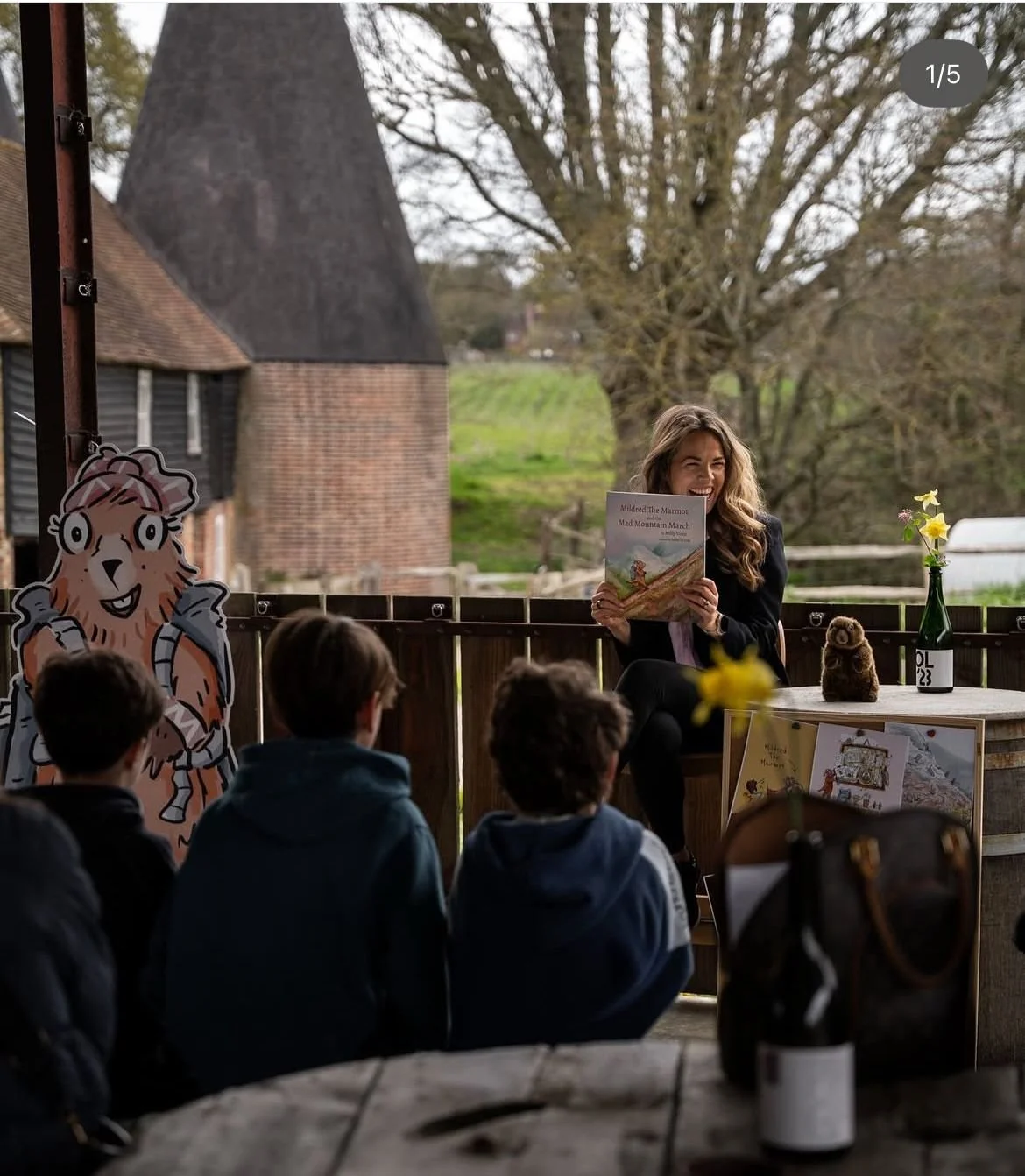
Author event at Tillingham, East Sussex. Photo © Olli Hopkins
5. Be ready for public speaking.
Now, it just so happens I really love public speaking. A lot of my career has centred around it. But if you are someone who finds the prospect of speaking to an audience, or reading aloud terrifying, it is worth working on this skill. Especially if you are a children’s book author, it is important to be able to engage and share your story effectively at events in order to get minds thinking and for there to be a real learning experience.
One strategy I have taught when it comes to confidence in public speaking, is to practise the speaking ‘event’ prior to the real thing. This is useful, and irons out certain worries (e.g “How will I hold the book and speak?” “How will I introduce myself and the title”, “What questions might I be asked?”. Brainstorming with your publisher is also key, so that everyone is (both literally and figuratively) on the same page.
Whilst you do not want to sound over-rehearsed, confidence comes from what you can control: the more you settle into the event proceedings, the more professional you will sound at what you are doing.
So, whether you are about to write down your first idea, sign your first contract or are preparing for your first book launch, I wish you all the best. Let me know how it goes!
My debut book published by Dottie Publishing is available on Amazon, Waterstones and all good book retailers.
If you have any author, event or general enquiries, get in touch here.